
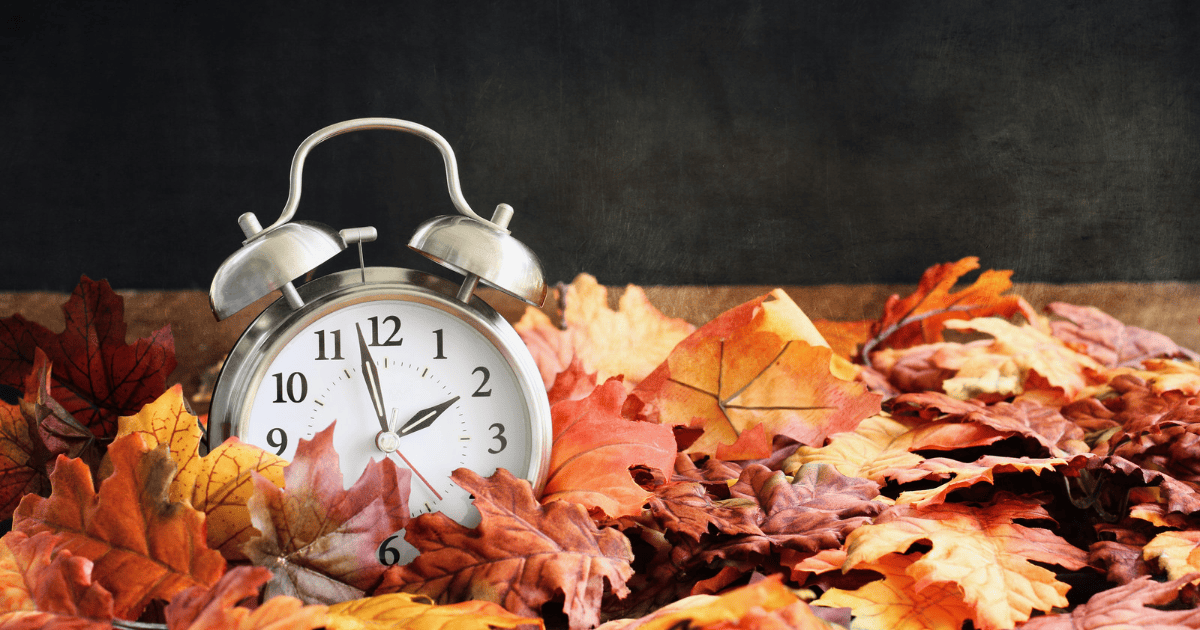
An extra hour of sleep sounds wonderful, doesn’t it?
This Sunday, November 1, we turn our clocks back one hour as Daylight Saving Time (DST) comes to an end. But while gaining an hour sounds like a bonus, our bodies don’t necessarily adjust as quickly as our clocks.
Why Do We Change Our Clocks Anyway?
Daylight Saving Time dates back more than a century. Germany adopted it nationwide in 1916 during World War I to conserve fuel. The United States followed in 1918, and the Uniform Time Act of 1966 eventually standardized the practice.
The original idea was to make better use of daylight and conserve energy. Whether it actually saves much energy today is debatable!
Interestingly, not everyone participates. Hawaii, most of Arizona, and several U.S. territories, including Puerto Rico, Guam, and the U.S. Virgin Islands, skip the twice-yearly clock changes altogether.
Your Body Has Its Own Master Clock
Deep inside your brain is a tiny control center called the suprachiasmatic nucleus (SCN). Think of it as your body’s master clock. It regulates your circadian rhythm, the approximately 24-hour cycle that influences sleep, energy, hormone production, and even metabolism.
Natural light is the most powerful signal that keeps this clock synchronized.
When we change the clocks, our internal rhythm doesn’t immediately follow. And research suggests this disruption can affect more than just our sleep.
What Does the Research Say?
Research published in medical journals, including JAMA, has examined some surprising health associations with seasonal clock changes.
Spring Forward: Losing an Hour
Studies have reported several short-term health and safety concerns following the spring transition:
- A modest increase in acute myocardial infarctions (heart attacks) during the following week.
- An increase in ischemic strokes during the first two days.
- More hospital admissions for atrial fibrillation among women.
- Approximately 6% more fatal traffic accidents.
- Less sleep, slower reaction times, lapses in vigilance, and increased daytime sleepiness, with some effects lasting up to two weeks.
Fortunately, many of these effects are short-lived. Not every study has found the same degree of risk.
Fall Back: Gaining an Hour
The fall transition is generally easier on our bodies. Some observational research has associated the return to standard time with lower all-cause mortality.
However, the earlier sunsets can still affect sleep patterns, mood, and energy levels.
Should We Stop Changing the Clocks?
Two major medical organizations, the American Academy of Sleep Medicine (AASM) and the American Medical Association (AMA), support eliminating seasonal clock changes in favor of permanent standard time.
That’s right! They favor keeping our clocks on the fall back setting all year.
Why? Because standard time better aligns our daily schedules with natural sunlight and our body’s circadian rhythm.
Five Ways to Reset Your Master Clock
- Get morning sunlight. Step outside shortly after waking. Even a 15–30-minute morning walk can help signal to your brain that it’s time to start the day.
- Stick to a consistent sleep schedule. Try to wake up and go to bed at approximately the same time, even on weekends.
- Keep moving! Pilates, walking, and strength training support better sleep and overall health. Consistency matters.
- Dim the lights in the evening. Limit bright lights and screen exposure before bedtime to help your body prepare for sleep.
- Be mindful of caffeine. That afternoon cup of coffee may be affecting your sleep more than you realize!
A Final Thought From Wilder Pilates
We talk a lot about strength, flexibility, and movement, but sleep is another important piece of healthy aging.
Our bodies thrive on rhythm and consistency. We can’t always control the clock on the wall, but we can help our internal clock stay on track.
So enjoy that extra hour this weekend, get outside for some morning sunlight, and keep moving!
Your body loves consistency, even when the clocks don’t cooperate!
